What to Say When…
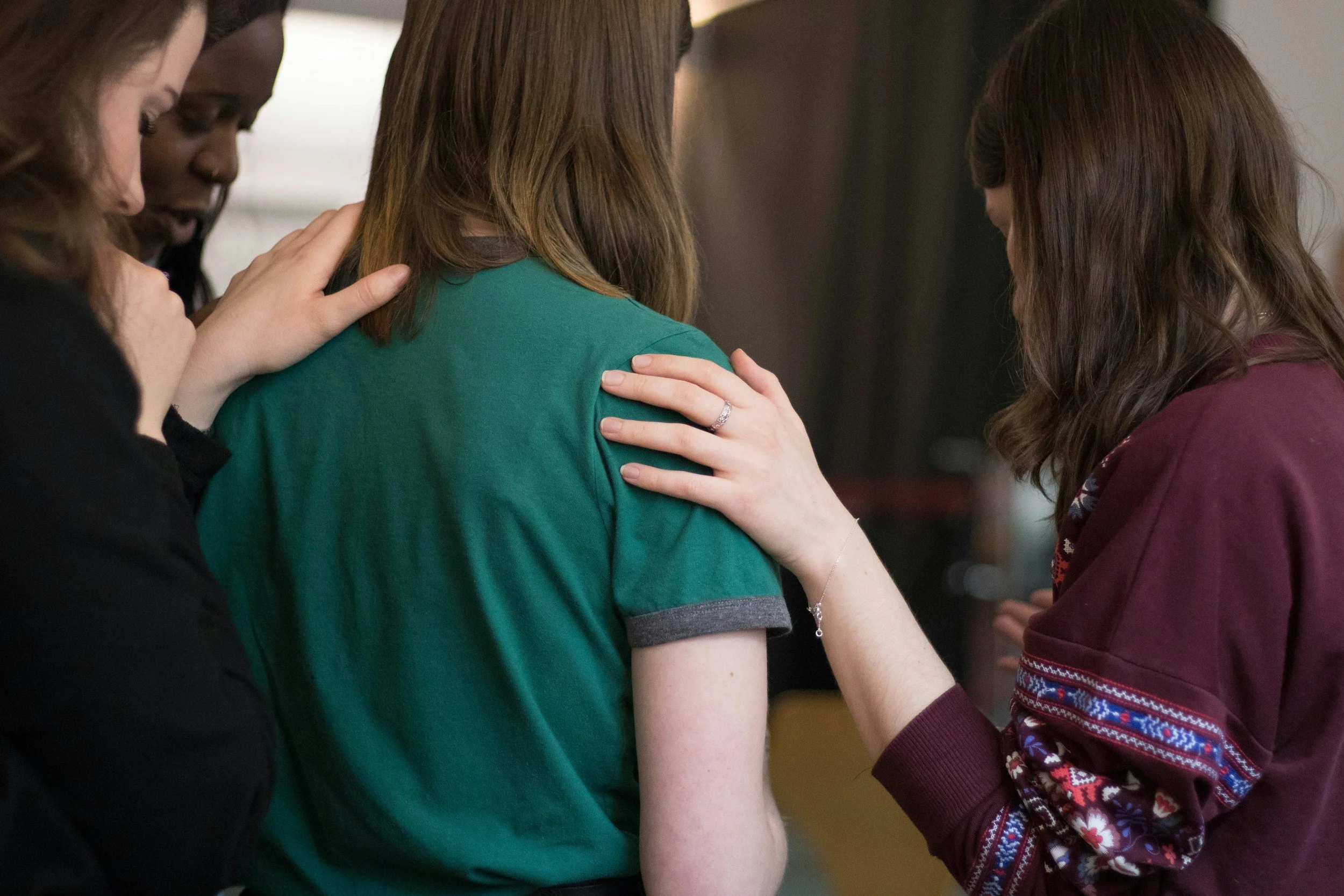
Think back to how many times you didn’t know what to say.
At the hospital bedside
In the reception line at a funeral
Over coffee as a friend shares a heartbreak
After the wildfire burns down a house
I don’t know about you, but in hindsight my fall-backs too often end up being verbal marshmallows, filling the air but not really satisfying anyone. I want to say something, anything, that might help in some way, but what often comes out is less help than I intend. Actually, the words we think will help can do more harm than good. Relying on cliches or quick fixes dishonors pain in an attempt to sidestep trauma.
It’s interesting to follow how Jesus acted when confronted with a tragedy, even though he knew it would turn out differently from how it appeared. In John 11, we find Jesus at the tomb of his friend Lazarus, and he didn’t rush to find the right words. Even though he knew the outcome, he simply wept.
The shortest verse in the Bible tells volumes.
Jesus had told his crew that Lazarus’ death would not be the end of the story. Something bigger was coming and they will have a front-row seat to it all. Think about the mind of Jesus, knowing his close friend would walk out of the tomb alive. Why tears? Why not go straight to the party?
I heard a guy say a line one time about this moment of drama.
Knowing something is going to be okay eventually doesn’t cancel out the fact that it isn’t okay right now.
Jesus didn’t skip the tears on the way to the miracle. He chose not to rush past Mary and Martha and their grief, and the rawness of the scene clearly comes through.
The conclusion to this drama did not overwhelm the disappointed sadness these women carried as they stood before him. This was an awful moment, and one we all have or will share, and Jesus lived in that moment before moving ahead. Part of the human condition is that we will necessarily shoulder times like these, when our faith tells us that it will work out, but right now we are consumed by emotional pain and loss.
This is what it looks like to live and walk and figure out a way through all of our unfinished stories.
But back to you and me when we are standing before a “Martha” consumed by a terrible moment, we are wise to consider our words. What might we say when we don’t know what to say? What can convey truth and hope without dismissing pain and loss?
Perhaps just sitting with your friend is the best plan. Then when it’s time for words, here are some ideas to possibly employ…
Instead of saying “Everything happens for a reason.” Consider, “I am so sorry, this is terrible.”
Rather than, “I know how you feel.” Try on, “I don’t know what to say, but may I just stay with you for a while?”
When it seems like it’s good to remind, “You just need to trust! Pray for a positive outlook.” How about, “What you are facing would hurt the best of us. I hate that you are going through it. But you aren’t alone.”
It’s important to remember “Everything happens for a reason” is never found in the Bible; however, lament often is. The psalms are filled with people yelling at, crying out to, pleading with God as they wrestle with a bad stretch of life-road. Remind yourself that we are allowed, even encouraged, to grieve, whether in silence or sobs.
Another scene from the Book that shows how this can look. Remember Job? In the aftermath of his catastrophes a trio of friends come to him, and his devastation is such that they hardly recognize the once-proud man, formerly so full of life. Now, picture him slumped in the dust and the unshadowed glare of his situation. He is silent in his grief. Listen to the text.
And they lifted up their eyes from a distance but could hardly recognize him. And they lifted up their voices and wept, and each one tore his robe and they threw dust over their heads into the air. And they sat with him on the ground seven days and seven nights without speaking a word to him, for they saw how great was his pain. (Job 2:12–13)
This sitting in silence for seven days is the Jewish practice of sitting shiva, in order to share grief in long moments without words. We (I) so often run toward explanations, reasons, solutions, while what is missed lies in simply letting the weight of the moment do its work. Job needed the silence. But still, silence with a grieving friend calls for strength to just be present, which is more difficult than yammering on.
During one of my surgeries, Claudia told me of a friend who sat with her in the hospital lobby. Just sat. I think I recall that she talked a little and might have knitted. That’s all it took to stand alongside in faithful presence.
I read something recently from Richard Rohr along these lines that rings true.
Silence requires us to be present to the unexpressed needs of others, needs of which they may themselves not yet know. It is a powerful means of fostering mutual encouragement among us, whom God has entrusted to one another in this wilderness of pain and doubt.
So friend, when it is your next turn to show up for someone in pain, consider beforehand how you will walk into the room and read the moment to perceive what is needed. Oftentimes, your presence alone speaks the loudest.
I could do better here. You too?
Music is always good
Funnies? Sure, here you go…
Liz was discussing the various aspects and possible outcome of the Insurance policy with the clerk at the Insurance Agency.
During the discussion, she asked, “Suppose I take the life insurance for my husband today and tomorrow he dies? What will I get?”
The clerk eyed her suspiciously, paused, and replied, “Twenty to life.”
****************
Ralph and Mabel had been married for many decades and every summer they attended the county fair.
This year the fair featured a helicopter offering rides for $50 for two people.
Ralph told Mabel he had always wanted to fly in a helicopter, a life-long dream, but Mabel, being as very frugal and responsible as her husband, told him he was being foolish. They commenced to chipping at each other right there and then.
Well, the pilot overheard the couple bickering and stepped in.
“Listen,” he said, “I’ll give you two a ride for FREE if you can stay quiet for the whole thing.
“Great!” the couple agreed and strapped in behind the cockpit.
The copter shot off like a rocket and the pilot did all the tricks he could manage to try to get them to scream or make any sound, but they stayed silent. Landing, he said over the headset, “Well, you did great, the trip is free. But tell me, how’d you stay quiet?
The old man said, “Well, it was mighty rough, especially when Mabel fell out…but fifty bucks is fifty bucks.”