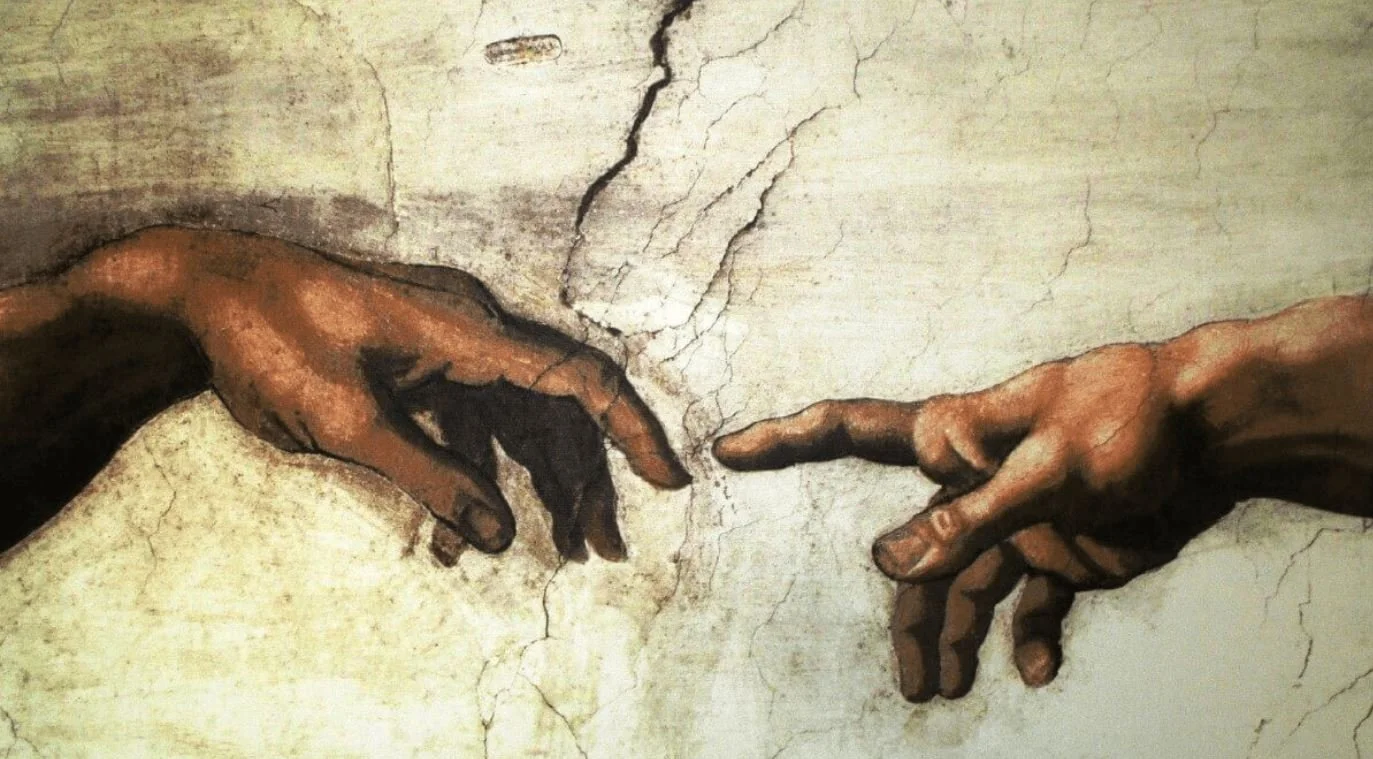
God’s Questions: On Relationship
Ours is a God who asks questions.
And when you pause long enough to think about that, it seems strange that he does. After all, he’s God. To get even a human-sized understanding of who he is, we take concepts we know and slap “omni” in front of the term.
He can do all things, so we refer to his power as “omnipotent.” We believe he is everywhere all the time, so the term is “omnipresent.” And in terms of his knowledge, “omniscient.”
So, if he knows it all already, why ask questions? If it isn’t about information, then it must be about revelation. The questions are designed to open up more understanding as to who we are and what we have done, who God is and how we relate to him. Uncovering. Revealing. Exposing.
Examples? Below are four:
After Cain kills his brother, God asks, “Where is your brother Abel?”
To Elijah, being chased by Jezebel and hiding in a cave, the question is “What are you doing here?”
Jesus, in the midst of a crushing crowd, when touched by a desperate woman he says, “Who touched me?”
Or in a boat after a deadly storm that he calmed, Jesus turns to the guys and asks, “Why are you so afraid?”
Hundreds of questions in the Older Testament and over 300 from Jesus in the gospels, all with the purpose of revelation, not information. So, it’s good for us to pay attention to see how some of those questions might travel to us and nudge us along a bit further on our journey of faith.
Here’s one, and it’s a good one for you and me.
After creation is finished and Adam and Eve are living in God’s garden and in harmony with him, they are tested and ultimately fail the test. How long the two lived in harmony with God is unclear.
While the text is silent, it’s interesting to ponder that there might have been years, decades, or even centuries of time living well with God. That is until the enemy, disguised as a snake, plants seeds of doubt in the couple as to the goodness of God and convinced them they would be better off going it on their own.
They disobey, experience shame and guilt, and hide from God in the very place they had experienced closeness and harmony with him. Genesis 3 tells the story, and it’s worth a re-read in a version not so familiar to you. Here’s just a bit of the text.
When the cool evening breezes were blowing, the man and his wife heard the Lord God walking about in the garden. So they hid from the Lord God among the trees.
Then the Lord God called to the man, “Where are you?”
He replied, “I heard you walking in the garden, so I hid. I was afraid because I was naked.”
Where are you?
Not a question of location but of relationship.
The first couple had left home, choosing to go it alone away from their design. God now introduces himself as the Seeker of those lost and away from home. Where are you conveys his seeing them while they hide, and asking for them to see where they had gone and to come back.
From that encounter through today, the same question is asked of every soul who has left God’s home in search of self-fulfillment, self-saving only to end up covered by a fig leaf ensemble and hiding from the One who made them. And the Spirit whispers that question every time we choose to believe the lie that God doesn’t care about us or our needs, no matter how long we have believed.
The unwarranted angry outburst
The lie so easily delivered
The two-click journey to pornland
The unkind gossip and unforgiven slight
Paul Simon sings “50 ways to leave your lover.” I have that beat by a mile. Lists of ways we leave home and close fellowship with FatherSonSpirit is never ending. For the couple, it was a feeling their desires were blocked by God. But the countless “whys” behind the “what” of turning our back on God are just the vehicle our enemy uses to woo us from home with false promises of self-fulfillment.
John, in his first letter, acknowledges how we are prone to wander, then charts a simple way home.
If we claim we have no sin, we are only fooling ourselves and not living in the truth. But if we confess our sins to him, he is faithful and just to forgive us our sins and to cleanse us from all wickedness.
It’s good to remember that confession is as simple as agreeing, again, with God as to what we have done. Repentance is turning away from what alienated us and moving toward home. The Spirit is the active agent prompting your heart to make some changes.
Then, rather than being all hang-dog over failure, we go again, as children with scraped knees coming back to a loving parent. Paul nails this idea in Romans 8.
So now there is no condemnation for those who belong to Christ Jesus.
This morning, look around. Might it be you squatting behind a bush, covering your shame with a fig-leaf excuse, and hoping God just passes you by? We’ve all been there, and will be again since we are people in process, not a finished product.
Come home.
Agree with God and return, again, to your garden of God. You will be welcomed with open arms, scars and all.
Music for the day ahead
…and a couple of lame jokes
A couple went to the county courthouse to get a marriage license. They accidentally walked into the office that handled hunting licenses.
"We're from out of state," said the prospective groom. "Can we get a license?"
The clerk replied, "No, but I can give you a three-day permit."
********************
An eccentric philosophy professor gave a one question final exam after a semester dealing with a broad array of topics. The class was already seated and ready to go when the professor picked up his chair, plopped it on his desk and wrote on the board:
"Using everything we have learned this semester, prove that this chair does not exist."
Fingers flew, erasers erased, notebooks were filled in furious fashion. Some students wrote over 30 pages in one hour attempting to refute the existence of the chair. One member of the class however, was up and finished in less than a minute.
Weeks later when the grades were posted, the rest of the group wondered how he could have gotten an A when he had barely written anything at all.
His answer consisted of two words:
"What chair?"