Leaderships Lessons from Deuteronomy 17
The topic of leadership ripples through both secular and religious circles today. What is leadership? How do we develop leaders? And what happens when leadership fails? This is especially important in churches, where trust in leadership is crucial.
I read someone recently who said trust is the currency of leadership. Trust is like a bank account that can be withdrawn as capital when major decisions are made. But when trust is compromised, whether by a careless word or a major indiscretion, that bank account is diminished or becomes bankrupt.
I also read recently about an older Christian leader who feared for the leaders of a younger generation who gain popularity through social media but perhaps lack the character to handle it. Competency pales in comparison to character.
Interestingly, tucked in the recitation of the Mosaic law in Deuteronomy, chapter 17:14-20 provides a leadership job description for a king of Israel. This description is both unique and ironic because nowhere else in the first five books of the OT is it found, and Israel at that time had no king.
The Lord was King (cf. Deut.33:5). Israel was a theocracy in that God primarily spoke to Moses who mediated God’s word to the people. But God anticipated his people wanting a king like their neighbor nations. When Samuel’s sons failed the character test in 1 Samuel 8, the leadership of Israel clamored for a king (8:5).
Beginning with Saul, Judah and Israel had a long line of kings, some good and many downright evil.
Enter Deuteronomy 17:14-20.
First, notice in this passage that God concedes to their desire to have a king (17:14-15). The Bible stipulates that this king must be of God’s choosing and a fellow Jew. These two qualifications just make sense. A man of God’s choosing rather than an eldest son who happens to be next in line (primogeniture) encourages a trustworthy leadership succession. And a fellow Jew as king understands the culture of God’s covenant people because he was born into it.
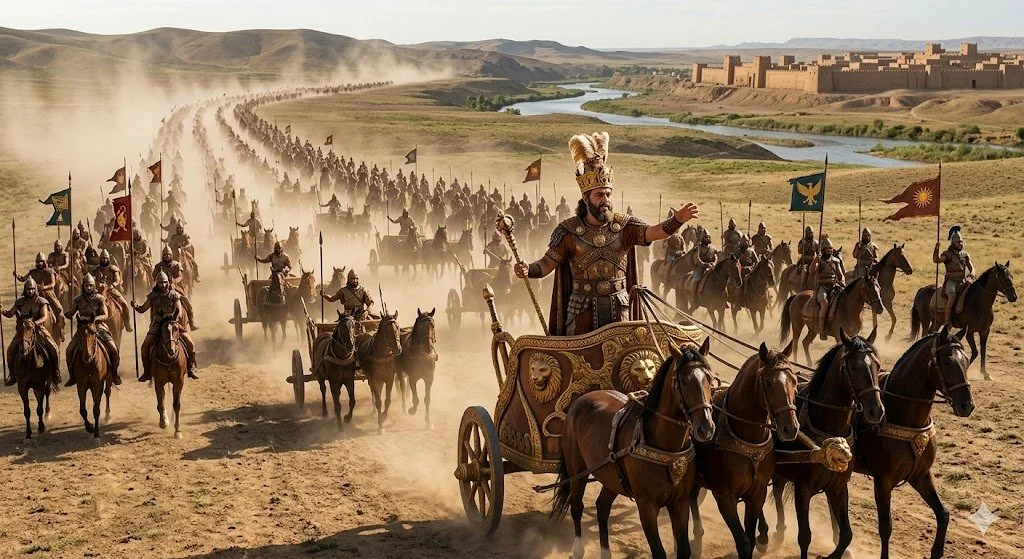
Second, Deuteronomy 17:16-17 warns against trusting in wealth and women instead of God. In his commentary on Deuteronomy in the New International Commentary on the Old Testament (NICOT), scholar P. C. Craigie comments: “Horses represented wealth in the Near East, but their principal function was related to warfare (p.255).” In other words, a king of Israel could easily shift his focus from God to the size of his army and the vastness of his wealth.
Translated to today, a Christian leader can be distracted from God by the size of his organization or church and the amount in his bank account.
Psalm 20:7 still holds true: “Some trust in chariots and some in horses, but we trust in the name of the Lord our God.” (ESV)
The reference to Egypt in the last part of 17:16 may indicate the temptation to trade God’s people for horses. Egypt was the place of slavery and oppression. God’s leaders must never go back there again.
The warning against wives and wealth in 17:17 reads like a chapter from Solomon’s life. 1 Kings 11:1 solemnly states: “Now King Solomon loved many foreign women…”. Verse 2 states the obvious consequence: “for surely they will turn away your heart after their gods. Solomon clung to these in love.” Craigie (p.256) asserts that many of these marriages were for political alliances but had the devastating effect of turning a king’s heart away from the one true God.
The same can be said for wealth accumulation (17:17b). It can be a consuming passion crowding out the Lord (cf. Prov.23:4).
Finally, Deut.17:18-20 stresses the importance of a king keeping God’s written word close to his heart. Whatever form this written word takes, this book “was to be the king’s vade mecum (lit. “go with me”), his life-long companion and source of wisdom and strength” (Craigie, p.257).
By treasuring and keeping this word, a king keeps himself from hubris, the overbearing attitude that he is somehow better than the people he governs. It also ensures trustworthy leadership that enriches a nation (17:20).
Isn’t this the kind of leadership we long for and pray for today in our government, our jobs, and our churches?