Unburdening a Condemning Heart
19 By this we shall know that we are of the truth and reassure our heart before him; 20 for whenever our heart condemns us, God is greater than our heart, and he knows everything. 21 Beloved, if our heart does not condemn us, we have confidence before God; 22 and whatever we ask we receive from him, because we keep his commandments and do what pleases him. –1 John 3:19-22 (ESV)
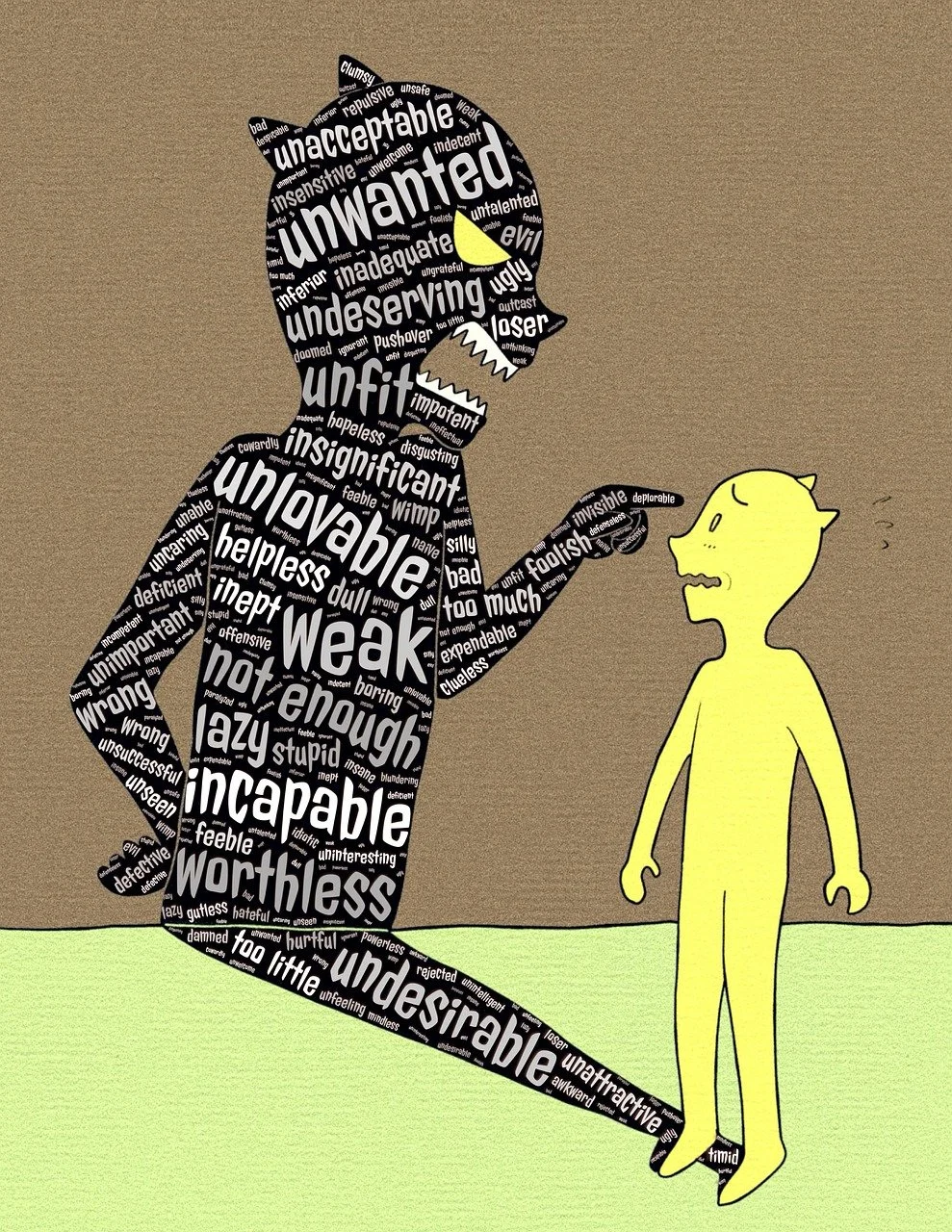
Too many of us live with a guilty conscience that paralyzes us. I’m not talking about the work of the Holy Spirit in convicting us of sin with the resulting godly sorrow that leads to repentance. I’m talking about the steady drumbeat of condemnation so many of us experience even as Christians.
Consider this excerpt from a commentary of 1 John 3:
As I have studied this letter in depth over the past few years I have sometimes found myself beginning to wonder whether I have made any progress at all in the Christian life. The letter is written to give us assurance, but not infrequently it brings us to see how little like our Lord we really are and how much further we have to go. As Christians, our hearts do often condemn us. Like a judge who discerns something in a prisoner which he must expose and sentence, our hearts judge us. We alone know our inner motives and how often our love for our brothers, perhaps especially for a particular brother or sister, falls far short of what it ought to be. Our hearts know things about ourselves that are unknown to others, and their condemnation, unlike the accusations of Satan, is not false.
—David Jackman in The Message of John’s Letters from The Bible Speaks Today, p.104
I don’t know about you, but that describes my experience as a Christian. Too many of us live with a condemning heart. Whether it’s because of our personality, family background, or faulty Christian teaching, too many of us carry the anchor of condemnation that weighs us down.
But this passage in 1 John provides a way out. Let’s look at what he says about us and about God.
We can have personal knowledge of belonging to God and be reassured in our inner being that we belong to God, because he knows everything about us (3:19)
It’s the heart that condemns us. “Heart” in the NT is not merely emotions. It encompasses our entire inner being. We intuitively know that our emotions affect our thoughts (and vice versa) and also our behavior.
It’s hard to go forward in our Christian lives if we lack assurance we’re part of God’s family. Maybe some of you had an unstable childhood. Your acceptance in the family was dependent on your performance or lack thereof.
Compounding that, you may have a sensitive conscience. You’re all too aware of your sin and shortcomings. And what may have been your family environment, you now apply to your place in the family of God.
Our hearts need to be persuaded (a good synonym for the word “reassure” used in v.19 in the ESV) that we are of the truth. We may need some self-talk (running the Scripture through our minds) and God-talk (heartfelt prayer) to unburden us from the self-condemnation. It’s a practical axiom of the Christian life that the less consumed we are with ourselves, we are then freed up to the needs and interests of others.
The heart assurance comes from the truth about God that he knows everything about us but loves us anyway (3:20)
When our heart condemns us (condemn=καταγινώσκω (kataginōskō), strong word in Greek), it’s telling us the reality about ourselves. Even though we’re new creations in Christ, residual sin still nags at us. A sensitive conscience joins right in the condemnation. Ironically that very sense of condemnation is a sign we belong to the truth instead of being separated from it. Even Paul called himself the chief of sinners, 1 Tim.1:15.
But God is omniscient. He knows everything about us. He knows us better than we know ourselves. Consider Psalm 139:1-6:
O Lord, you have searched me and known me!
2 You know when I sit down and when I rise up;
you discern my thoughts from afar.
3 You search out my path and my lying down
and are acquainted with all my ways.
4 Even before a word is on my tongue,
behold, O Lord, you know it altogether.
5 You hem me in, behind and before,
and lay your hand upon me.
6 Such knowledge is too wonderful for me;
it is high; I cannot attain it.
And how about Hebrews 4:12-13:
12 For the word of God is living and active, sharper than any two-edged sword, piercing to the division of soul and of spirit, of joints and of marrow, and discerning the thoughts and intentions of the heart. 13 And no creature is hidden from his sight, but all are naked and exposed to the eyes of him to whom we must give account.
We hide our deepest thoughts and feelings even from those closest to us, yet God knows it all.
But John writes that God is greater than our heart, knows it all, and loves us anyway and in spite of ourselves. Philip Yancey wrote in his What’s So Amazing about Grace: “There’s nothing we can do to make God love us more; but there’s also nothing we can do to make God love us less.”
Robin and I recently visited some friends in the town where I served as a pastor for over 20 years. I know things about these people that they have confided in me that only God and I know. Yet I still love them, as does God.
If we can somehow grasp this assurance, we can go forward in our faith with an unburdened heart (3:21-22)
We can have the kind of confidence that a person speaking freely in a city council meeting has. Like the freedom of speech we enjoy during a political season such as now. We can pray freely before God because we are his children. Hebrews 4:16 says, “Let us then with confidence approach the throne of grace that we may receive mercy and find grace in time of need.”
We can live freely knowing that God is not waiting to squash us like a bug when we step out of line. He disciplines us but doesn’t punish us.
This confidence exhibits itself in answers to prayer in line with the obedience we exhibit not out of dread but in response to the love he shows us. Answers to prayer are not conditional upon our obedience. Our obedience shapes our prayers so we receive more answers that conform to God’s will.
As our lives conform to Christlikeness, our prayers become focused on what he really wants us to pray.
Charles Wesley, 18th century hymn writer, wrote this verse in his song, And Can It Be:
No condemnation now I dread;
Jesus, and all in Him, is mine!
Alive in Him, my living Head,
And clothed in righteousness Divine,
Bold I approach the eternal throne,
And claim the crown, through Christ my own.
Bold I approach the eternal throne,
And claim the crown, through Christ my own.
And John Wesley, Charles’s brother, once prayed: “Lord, cure me of my intermittent piety and make me thoroughly Christian.”
We live with the tension that we’re not what we should be, yet God accepts us where we are. But he also loves us too much to leave us there. And that can free us from a condemning heart.